Spot the spaniels
Lots of artists like to bring the same figures or characters back into their work. You might notice them popping up again and again, sometimes front and centre, sometimes quietly tucked away. These recurring figures often become part of an artist’s visual language; a way of creating continuity while still leaving plenty of room to experiment and change.
Art history is full of artists who enjoyed sneaking small, repeated details into their work, often with a sense of humour. Hieronymus Bosch packed his paintings with odd little creatures and bizarre scenes that reward close observation. Pieter Bruegel the Elder loved filling his landscapes with tiny figures doing everyday (and often slightly ridiculous) things. Even Leonardo da Vinci was known for hiding playful visual puzzles and faces within rocks, clouds, and backgrounds.
More recently, artists like René Magritte repeatedly used bowler hats and suited men to create quietly absurd situations, while Paul Klee introduced whimsical, childlike figures that seem to drift between symbols and characters. Keith Haring’s radiant baby or Jean-Michel Basquiat’s crowns worked in a similar way; simple marks that became instantly recognisable, but also flexible enough to appear in different moods and contexts.
What’s interesting about these small, recurring details is how they encourage viewers to slow down. Spotting them can feel like being let in on a private joke, or discovering a hidden message left behind by the artist.
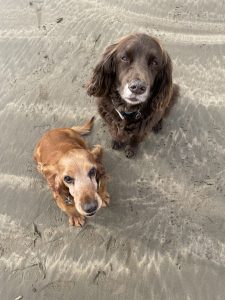
In my own work, I often include small figures of my two cocker spaniels, Simon and Celeste. They don’t appear in every piece, but they turn up often enough to be recognised. You might find them frolicking on a lifeboat ramp in Appledore or leaping about on a riverside path in Stockbridge. Simon is a chocolate brown working cocker spaniel, and Celeste is a fox red show cocker, and they slip into my compositions in different ways each time.
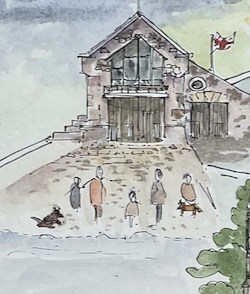
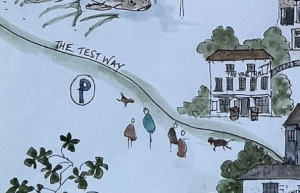
They can be spotted in some of my maps, in commissioned pieces, and even in the jigsaws I’ve created. I think it makes the work feel more personal. They add a sense of playfulness and familiarity, and they become part of everyday landscapes and moments that shape how I see the world. In a way, Simon and Celeste have become a kind of signature; not always obvious, but quietly there for those who enjoy looking closely.
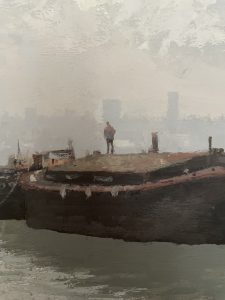
My father, Roy Perry RI, a landscape painter, often included anglers in his work. You could find these figures standing on a riverbank, fishing off a Thames barge, perched on the edge of a wharf. My mother always said looked like they were having a wee. She called them his ‘widdlers’ and they became a standing joke in the family.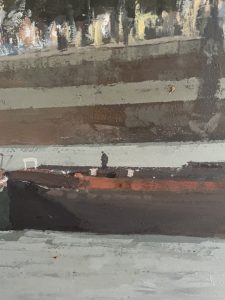
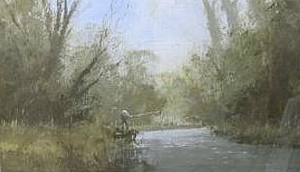
Recurring characters can feel like old friends. They invite viewers to wander around an image, notice the details, and maybe smile when they realise they’ve spotted something familiar again.
